
The race to develop ever-faster, smarter, and better drones has taken a new turn, and this time it is led by Germany.
Can you picture yourself witnessing an electrically powered plane accelerate to a level that was considered impossible before?
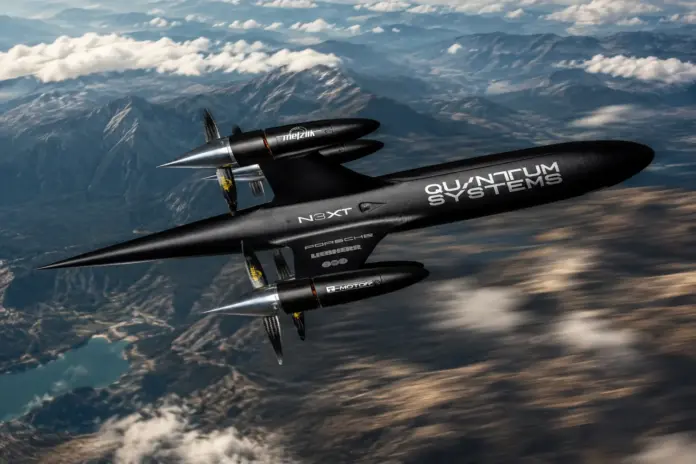
This was witnessed by the public when the Apex Recordhunter the world’s fastest electric drone from Quantum Systems, hit 699 kilometers per hour (434 miles per hour) during a level flight test on June 26, 2026. Assuming the claim is validated, the drone will beat the current electric drone speed record.
Unlike recreational drones meant for photography and mapping flights, the Apex Recordhunter is purely a technical demonstration drone.
A Record-Breaking Flight
According to Quantum Systems, the Apex Recordhunter attained its impressive speeds through internal tests conducted in Germany. The drone flew straight and levelly, which is essential, considering that speed records made in a diving or plunging maneuver are not usually regarded as being in the same league.
Despite being unofficial at present, the record has surpassed the certified benchmark of 657.59 km/h, and Quantum Systems intends to get it officially recognized.
Designed for Speed, Not Photography
First impressions of the Apex Recordhunter may be that it resembles more of a tiny airplane rather than an ordinary quadcopter.
The design elements consist of:
- A fully electric, fixed-wing design
- Extremely light weight airframe (about 2 kg)
- Excellent aerodynamic design
- High-power electric motors
- Specialized high-discharge batteries provided by Porsche subsidiary, V4Smart
This enables the aircraft to reach remarkable speeds while maintaining stability at those speeds.
Not Only About Speed Records
Setting speed records is not all that Quantum Systems aimed for.
The Apex Recordhunter was created by Quantum Systems as a platform for testing new technologies that will be used in future high-speed drones.
Experience gained during the development of the record hunter can be used to create drones able to respond to quickly changing aerial threats.
Importance of Fastest Electric Drone
In today’s warfare scenario, the use of drones has been significantly transformed.
Instead of focusing on developing costly missile launchers, defense forces are more interested in finding out high-speed intercepting drones that could neutralize any enemy drone effectively, and this can be done much more cheaply.
A high-speed drone will:
- Get to the target first
- Have greater chances of being effective
- Rely less on costly missile launchers
- Be highly versatile
Apex RecordHunter is a prime example of where the future of electric power lies.
The Engineering Behind the Speed
To reach nearly 700 km/h, some technological advancements have been made:
- Ultra-lightweight structure made of composite materials
- Very aerodynamic shape
- Electric engine
- Advanced battery cells
- Flight control system
This is not an innovation alone but the combination of several innovations in one machine.
Officially Verified Yet?
The accomplishment hasn’t been officially verified even though there has been quite some hype surrounding it.
In order for such an organization to verify the feat officially and add it into its records, it has to go through independent verification procedures. For example, FAI and Guinness World Records use approved procedures and techniques.
What This Means to the Drone Industry
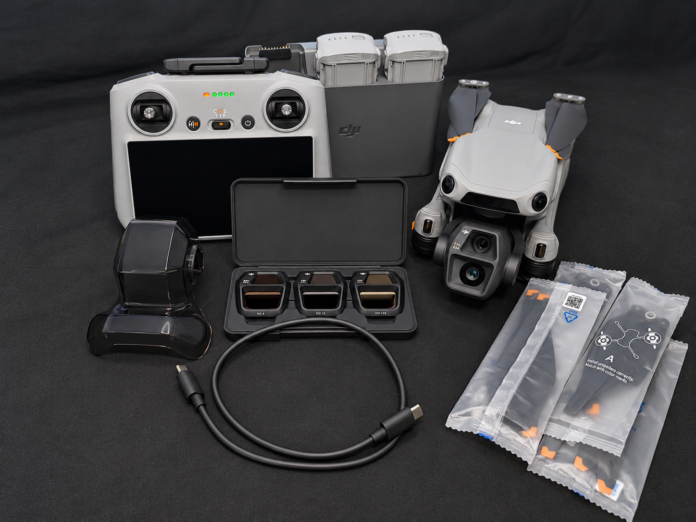
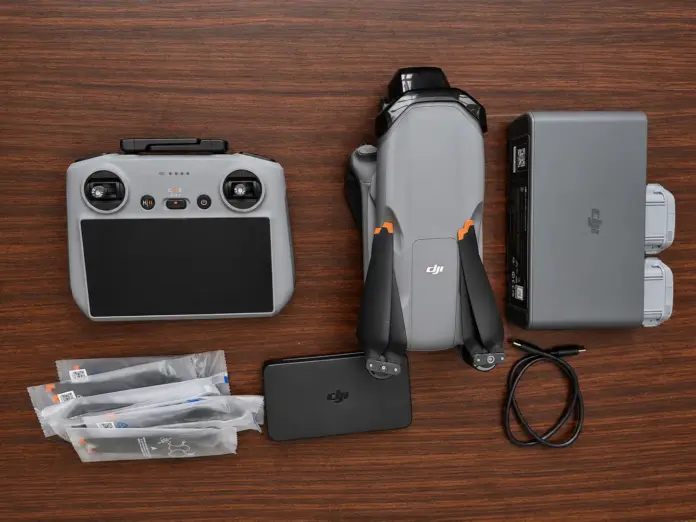
For those running businesses with drones, the Recordhunter is not meant to be a substitute for cameras such as the DJI Air 3S or enterprise-grade map-making drones.
The significance of the aircraft lies in the fact that it shows that it is possible to create electric planes that perform exceptionally well.
A number of the innovations that are being used today started from experimental planes.
Conclusion
While the Apex Recordhunter is certainly an impressive statistic on a speed chart, it stands for much more.
It showcases how quickly electric aviation is progressing and emphasizes the increasing importance of unmanned aerial vehicles in the future of aerospace technology. Even if the 699 km/h flight doesn’t receive certification, Quantum Systems has already proved what might be accomplished in the next iteration of fast drones.
For hobbyists, engineers, and pilots, this groundbreaking accomplishment will come as a clear reminder that the future of flight is closer than ever before.