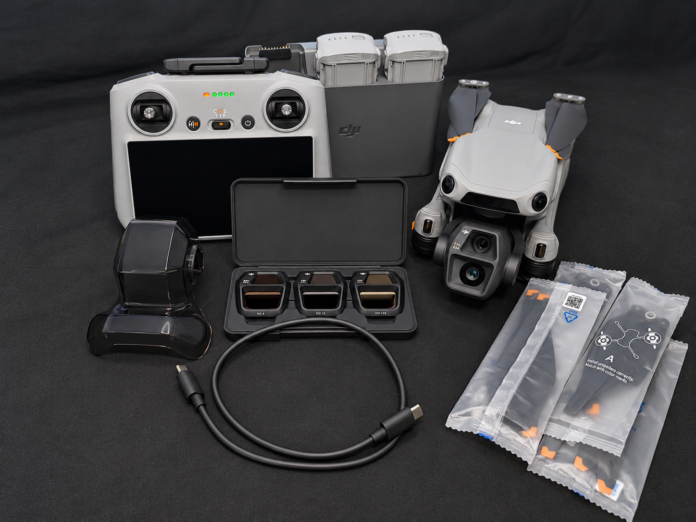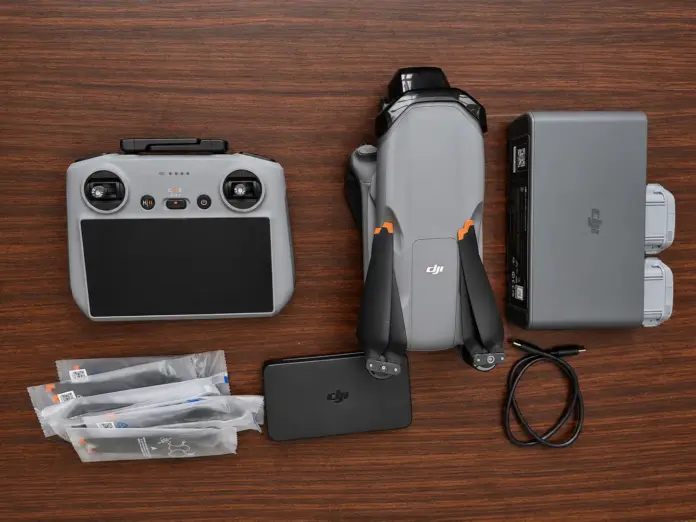
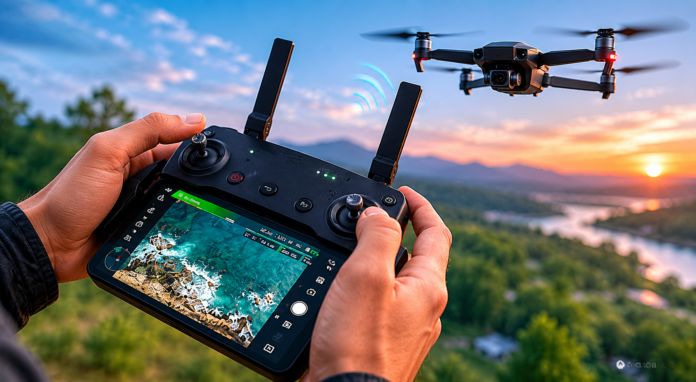

Modern drones have revolutionized various sectors like aerial photography, farming, surveying, inspections, defense, mapping, and emergencies. Although cameras and smart sensors might get more attention, it is the drone controller that truly bridges the gap between the pilot and the drone.
The drone controller is the main device that lets a pilot communicate with and control a drone in real-time. All movements, camera controls, flight commands, and emergency actions are initiated from the controller. An efficient and responsive control system is essential for any drone to fly safely and accurately, regardless of sophistication.
Here we will describe how drone controllers work in simple language so that both beginners and professionals can easily understand the technology behind the working of drone controllers.
Table of Contents
What Is a Drone Controller?
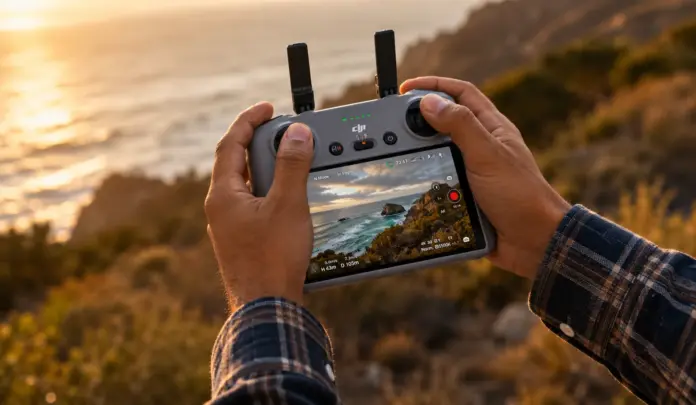
A drone controller (also known as a UAV controller, drone transmitter, or drone remote controller) is a handheld device that transmits wireless flight commands to a drone.
The controller is the link between the pilot and the aircraft. As soon as the pilot operates the joystick or pushes a button, the controller translates such movements into digital signals and sends them via radio waves to the aircraft.
Those commands are then processed by the drone’s onboard flight controller to execute the required movement.
Simple Control Flow
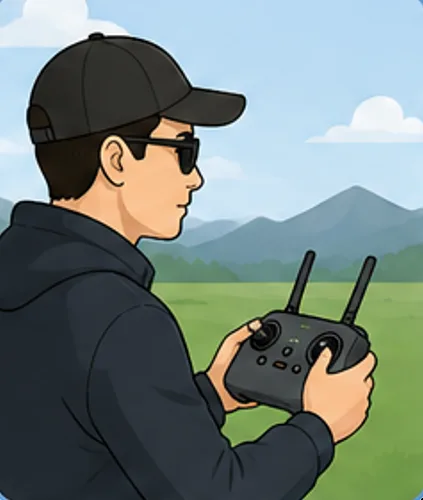
Pilot Input →
The pilot gives input using sticks and buttons.
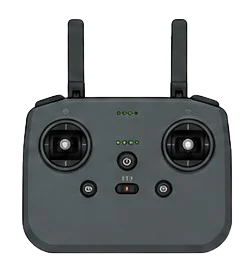
Drone Remote Controller →
Controller reads the inputs and prepares control signals.
Wireless Signal →
Control signals are sent wirelessly to the drone.
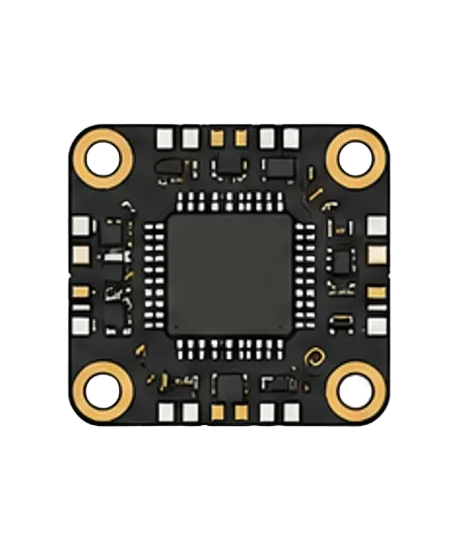
Flight Controller →
The flight controller receives signals, processes them, and calculates motor outputs.
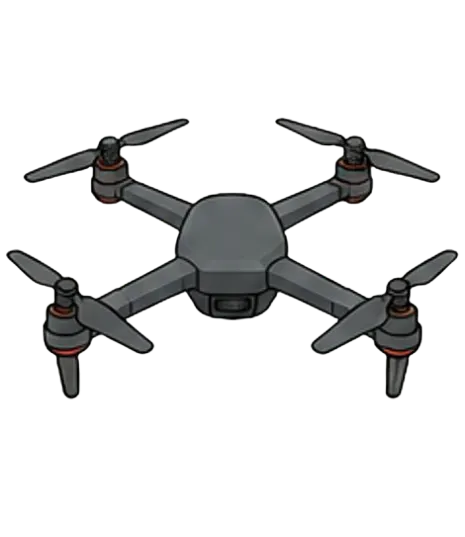
Motor Response →
Motors adjust speed and thrust, and the drone responds accordingly.
Drone Maneuvering
The drone is maneuvering with different control inputs from the remote controller. Moving the control stick forward flies the drone forward. By increasing throttle you also increase the speed of the motor and therefore the lift generated, so the drone will go higher. The yaw stick, when rotated, turns the drone clockwise or counterclockwise to change its heading direction. Also, pressing the Return-to-Home (RTH) button triggers an automated safety mechanism that returns the drone to its pre-recorded takeoff point.
Difference Between a Drone Controller and Flight Controller
These two systems are often confused by beginners, but they perform completely different functions in drone operation.
| Feature | Drone Controller | Flight Controller |
|---|---|---|
| Definition | Handheld remote device used by the pilot | Internal onboard computer inside the drone |
| Main Function | Sends flight commands to the drone | Processes commands and stabilizes the aircraft |
| Operated By | Drone pilot | Automated onboard system |
| Location | Outside the drone | Mounted inside the drone body |
| Controls | Roll, pitch, yaw, throttle, camera, flight modes | Motors, stability systems, navigation calculations |
| Communication | Transmits wireless radio signals | Receives and executes transmitted commands |
| Uses Sensors? | No | Yes, it uses gyroscope, accelerometer, GPS, compass, barometer |
| Importance | Allows pilot control and communication | Ensures stable, balanced, and safe flight |
Why Are Drone Controllers Important?
The quality of the communication between the pilot and the aircraft is crucial to the stability and safety of the drone.
- Smooth Flight Movement: Fine-tuned adjustments are possible with the responsive drone controller, which allows pilots to make smooth and controlled flight movements without any abrupt jerks or instability.
- Stationary Hovering: Reliable communication between the controller and the drone enables stable hovering, allowing the aircraft to remain in a fixed position even in light wind conditions.
- Navigation at its best: Accurate control inputs make it possible for the drone to follow the desired flight paths, resulting in more efficient navigation during mapping, inspection, and surveying missions.
- Stable Aerial Photography: Consistent controller response enables pilots to execute smooth maneuvers for sharper images and more professional-looking aerial videos.
- Emergency Safe Handling: During emergency situations, such as a collision with obstacles or sudden changes in weather, a reliable controller enables pilots to react promptly and safely.
- Improved Long-Range Communication: Advanced communication technology ensures robust communication between the drone and the operator over long distances, minimizing the risk of communication failure and operational errors.
- Controller Responsiveness: A good drone controller will translate pilot commands into immediate actions, leading to accurate maneuvers, better flight control, and better overall safety.
The controller responsiveness is a big deal for professional drone operators. If the signal is off or delayed, it can cause a crash or mission failure.
The Four Main Drone Flight Controls
All drone controllers have four basic flight controls: roll, pitch, yaw, and throttle. All these controls together decide how a drone moves, turns, tilts, climbs, and remains stable in flight.
1. Roll Control
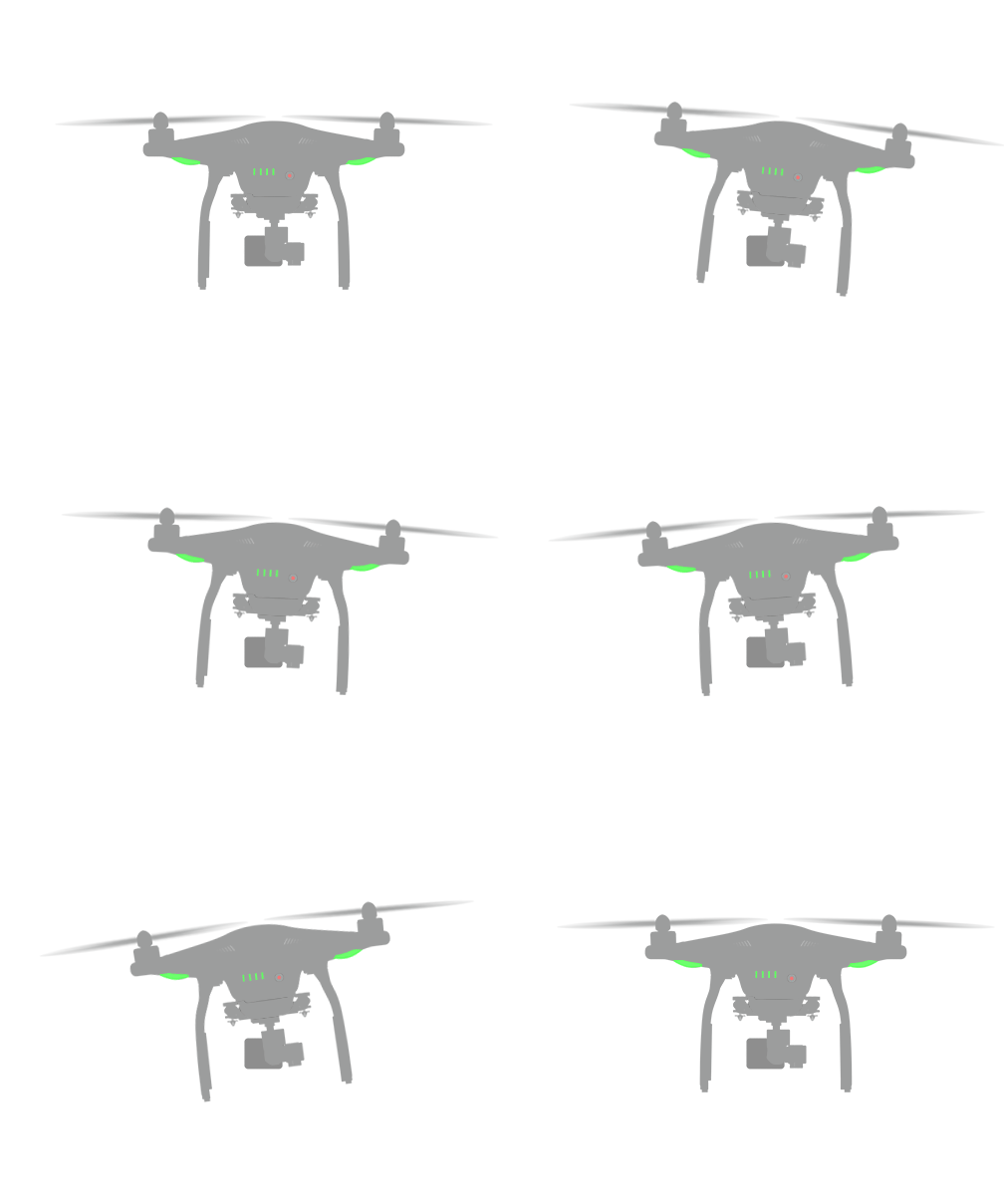
The roll causes the drone to tilt left and right as it flies. When the pilot slides the roll stick to the side, the motor speeds are altered asymmetrically to induce motion in either the left or right direction. The roll maneuver is commonly used for lateral navigation, smooth cinematic shots, position correction, and coordinated aerial turns.
2. Pitch Control
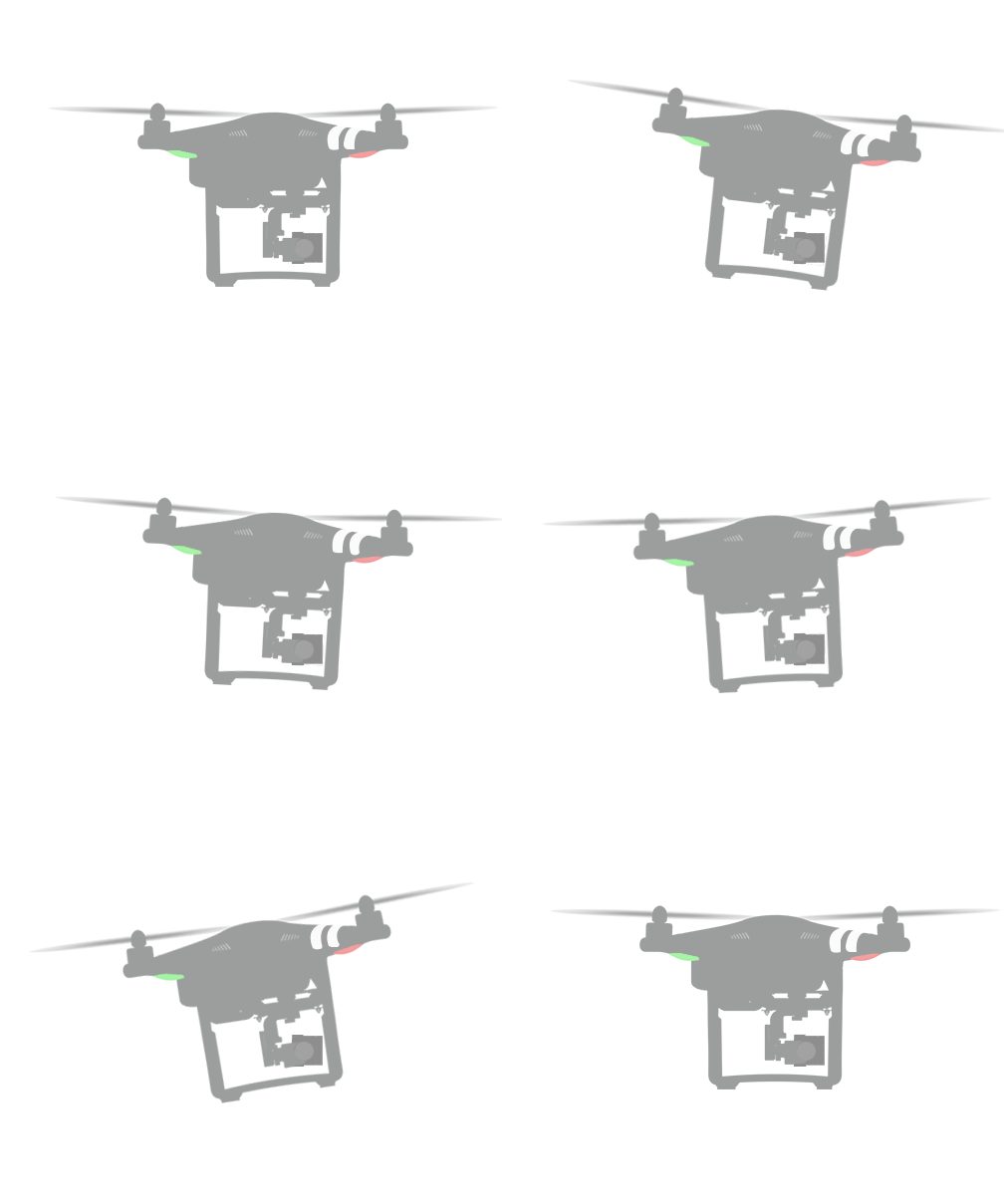
The drone’s forward and backward movement is controlled by pitch. But when the pilot pushes the pitch stick forward, the drone tips forward, and the rear motors increase thrust and the front motors decrease thrust, allowing the aircraft to accelerate. To fly forwards, control your speed, keep up with moving subjects, and keep smooth directional movement in the air, pitch control is needed.
3. Yaw Control
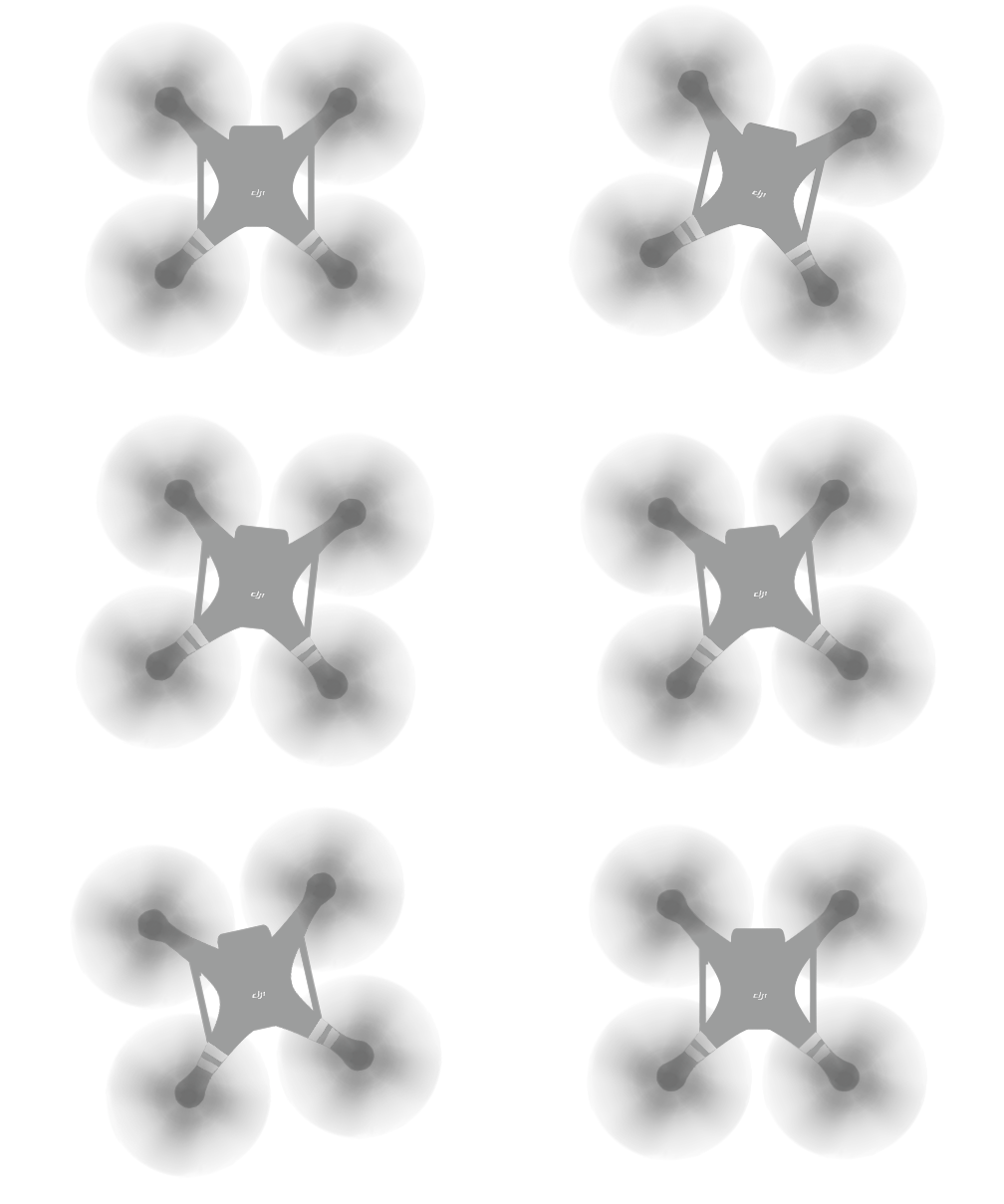
Yaw is the control of the drone’s rotation, turning your drone either clockwise or counterclockwise without much of a change in position. This movement changes the heading direction of the drone and is done by rotating opposing motor pairs at different speeds. The flight controller accelerates one pair of motors and decelerates the other to generate rotational force. Yaw control is often used to navigate the drone, change orientation, frame camera shots, and create smooth cinematic orbit movements.
4. Throttle Control
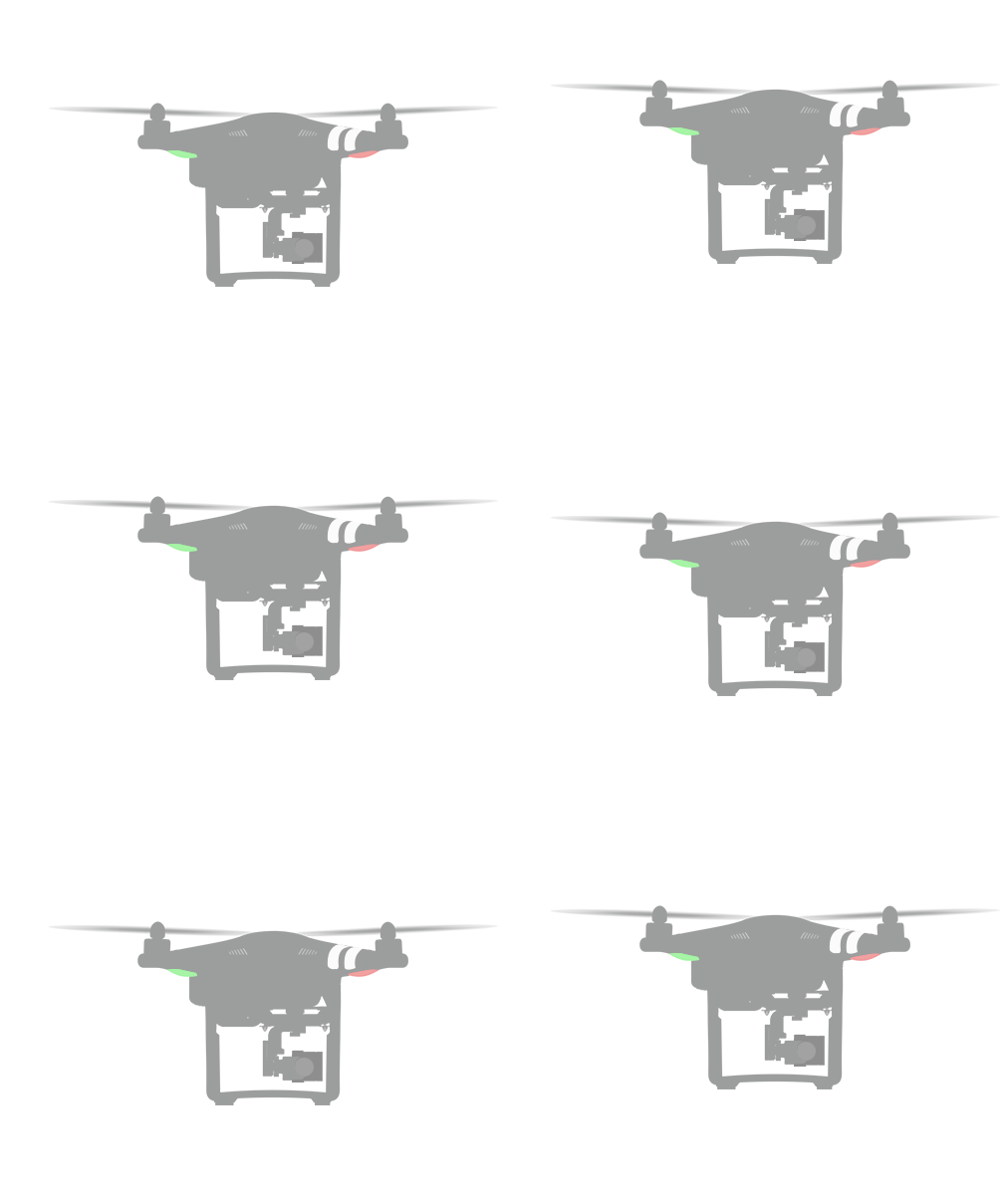
The throttle controls the speed of the drone’s motors. This controls the altitude of the drone. When the pilot wants to go up, he pushes the throttle up. This makes the motors spin faster, which pushes more air down, which makes the drone go up. If you ease the throttle down, the drone will lose lift and sink smoothly. The throttle control is required for safe landing operations, takeoff, controlled descent, climbing, and hovering operations.
How Roll, Pitch, Yaw, and Throttle Work Together
All four controls are functional during flight.
For example, when shooting a moving vehicle, a pilot may:
- Increase throttle to hold altitude
- Use pitch to move forward
- Apply roll for side tracking
- Adjust yaw to keep the camera aligned
This coordination enables the drones to move stably and precisely, even if it is windy.
Main Components of a Drone Controller
Control Sticks
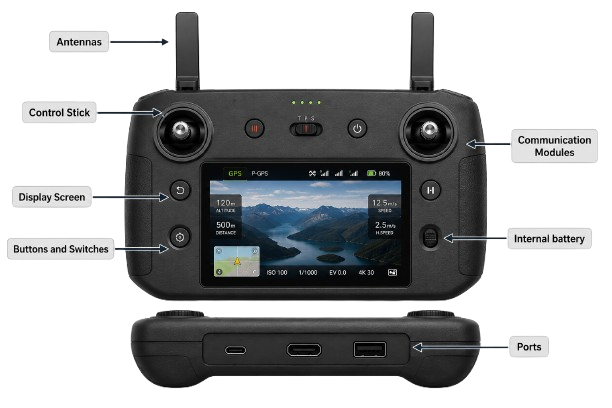
The main input devices are the control sticks (joysticks), which the pilots use to manually control a drone. Pilots can move the sticks in different directions to control roll, pitch, yaw, and throttle movements. The controls allow the drone to move forward, backward, and sideways; turn; and go up and down with precision.
Antennas
The antennas transmit and receive radio signals between the drone controller and the aircraft. They are critical to maintain a continuous communications link, ensuring that flight commands are received correctly and telemetry data is received uninterrupted. If you place your antenna properly, you can greatly increase the signal strength and the range of communication.
Communication Modules
Communication modules are the internal components that take care of the wireless communication between the controller and the drone. They handle radio frequency signals, manage communication protocols, and ensure that the data is transmitted efficiently and securely. Modules help to ensure reliable control even when there is a risk of signal interference.
Display Screen
Many modern smart controllers come with built-in display screens to provide pilots with real-time flight information. These screens can show live video feeds from the drone camera, GPS location, battery levels, altitude, speed, and other telemetry data. The displays are integrated, meaning there is no need for external smartphones or tablets, and efficiency of operations is increased.
Buttons and Switches
Drone controllers have a bunch of buttons and switches with the intention of easy access to critical functions. These controls are typically used to operate the camera, select the flight mode, activate Return to Home (RTH), record photos and video, and perform emergency procedures. Instead of navigating through menus, pilots can quickly perform important functions with dedicated buttons.
Internal Battery
An internal battery provides power to the drone controller and its communication systems. A reliable battery guarantees continuous operation during flight missions and powers features such as display screens, wireless communication modules, and onboard processing systems. Most controllers have battery indicators so that pilots can see how much power they have left.
Ports
Controllers of drones have many ports, including USB and accessory ports. These ports are for charging the controller, updating its firmware, connecting a smartphone or tablet, and connecting external accessories. They also assist with data transfer and system maintenance, helping keep the controller up to date with the latest software improvements.
How Drone Controllers Communicate with Drones
You communicate with the drones using radio frequency (RF) communication systems with the drone controller. When a pilot moves the joystick or hits a button, the controller converts that input into digital signals, which it sends wirelessly to the aircraft. Meanwhile, the drone is constantly transmitting telemetry information and real-time video data to the controller. This constant back-and-forth communication allows pilots to keep track of flight status and maintain tight control throughout the mission.
Common Drone Frequency Bands
Drone communication systems typically operate on certain radio frequency bands that balance range, speed, and reliability.
2.4 GHz
The 2.4 GHz frequency band is widely used in consumer and professional drones due to its excellent communication range and ability to penetrate obstacles more effectively. It provides reliable performance in open environments and is commonly found in many commercial UAV systems.
Key Advantages:
- Longer communication range
- Better obstacle penetration
- Widely supported across consumer drones
- Reliable performance in various environments
5.8 GHz
The 5.8 GHz frequency band offers faster data transmission and lower latency, making it ideal for applications that require real-time responsiveness. It is particularly popular in FPV (first-person view) drone systems, where low-latency video transmission is critical.
Key Advantages:
- Faster data transmission
- Lower interference in crowded areas
- Reduced latency
- Preferred for FPV flying and racing drones
Many modern drone systems can automatically switch between 2.4 GHz and 5.8 GHz frequencies to maintain the strongest possible connection and improve communication reliability.
Advanced Drone Communication Systems
As drone technology has evolved, manufacturers have developed proprietary advanced communication systems that provide greater range, stronger signal stability, better video quality, and less latency.
DJI OcuSync
DJI OcuSync is an intelligent transmission technology that automatically selects the best frequencies to maintain strong communication links and transmit high-definition video feeds over long distances.
DJI Lightbridge
DJI’s Lightbridge was one of the first digital transmission systems, designed to provide professional-quality video transmission and stable control signals for aerial imaging and commercial applications.
SkyLink
SkyLink is a wireless communication platform for a variety of UAV systems, providing long-range command, control, and data transmission.
Crossfire
Crossfire is a very popular long-range radio system that is commonly used by FPV pilots. It is known for its excellent signal reliability, low latency, and long-range operation.
ExpressLRS
ExpressLRS is a widely used open-source radio communication system among FPV enthusiasts. It provides ultra-low latency, long-range performance, and efficient signal handling.
These communication technologies of the highest order give a great boost to:
- Signal stability
- Video transmission quality
- Communication range
- Latency reduction
- Flight safety
- Overall control responsiveness
Data Sent Between the Drone and Controller
The communication system of a drone relies on a continuous bi-directional data exchange between the controller and the aircraft.
Controller to Drone
The controller sends the drone commands on how to fly. These commands are:
- Flight control inputs
- Camera operation commands
- Flight mode selection
- Navigation instructions
- Return-to-Home activation
- Emergency procedures
Every movement performed by the drone originates from signals transmitted by the controller.
Drone to Controller
The drone constantly feeds critical operational data back to the controller, allowing pilots to monitor the aircraft’s performance in real time.
This information typically includes:
- Live video feed
- GPS location
- Battery status
- Flight altitude
- Airspeed and ground speed
- Signal strength
- Warning notifications
- Flight system health information
This two-way communication system is essential for maintaining situational awareness, ensuring flight safety, and facilitating precise drone operations in recreational, commercial, and industrial environments.
Types of Drone Controllers
Drone controllers vary in design and configuration depending on the purpose of the drone, the user’s level of experience, and the operational requirements. From simple handheld remotes to advanced smart controllers and app-based systems, each type has its own unique features and capabilities.
Standard Remote Controllers
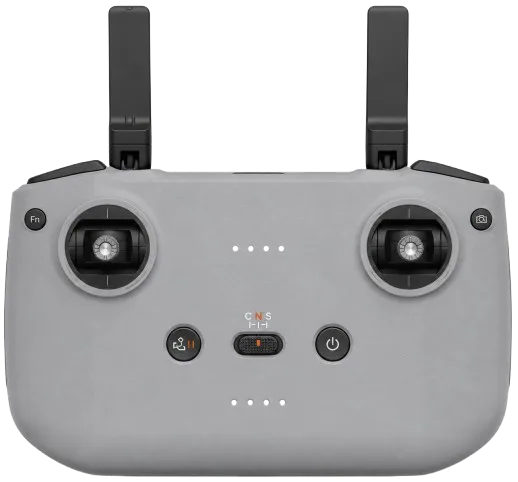
The most common type of drone controller used today is a standard remote controller. Typically, these old-school handhelds are paired with a smartphone or tablet that shows live video feeds and flight data. They have physical joysticks and buttons that allow for fine control of the drone’s movements, which makes them suitable for both beginner and experienced pilots.
Key Characteristics:
- Physical control sticks for accurate flight control
- Requires a smartphone or tablet for display functions
- Widely used in consumer and prosumer drones
- Reliable and easy to operate
Smart Drone Controllers
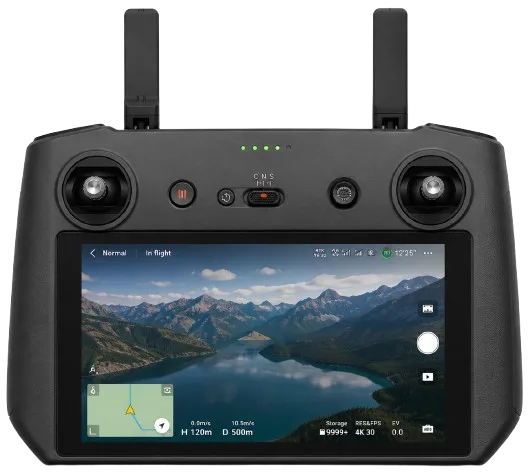
Smart drone controllers have a built-in display screen and integrated operating system, so you don’t need to use an external mobile device. The controllers are designed for professional and commercial drone operations where reliability and efficiency are crucial. The integrated display offers real-time flight data, live video feeds, and advanced mission controls, all in one device.
Advantages of Smart Controllers:
- Brighter screens for improved visibility in sunlight
- Faster setup without requiring a smartphone connection
- Better outdoor performance and user experience
- Professional-grade reliability and stability
- Reduced cable management and connection issues
Smart controllers are commonly used in aerial surveying, inspection, mapping, and commercial photography applications.
FPV Drone Controllers
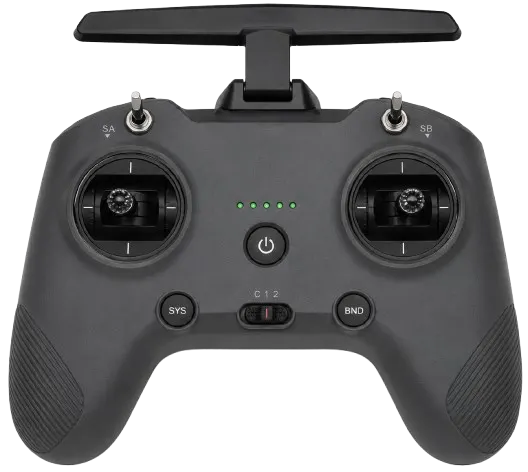
FPV (First Person View) drone controllers are designed for low latency and high-speed flight. These controllers are built for quick reaction times and precise control, making them ideal for racing, freestyle flying, and cinematic FPV. FPV transmitters are different from standard controllers, as they often have customizable switches, long-range communication systems, and more extensive tuning options.
Common Applications:
- FPV racing drones
- Freestyle FPV flying
- Cinematic FPV videography
- Long-range FPV missions
FPV controllers are responsive, which means that pilots can perform aggressive maneuvers and maintain accurate control at high speeds.
App-Based Controllers
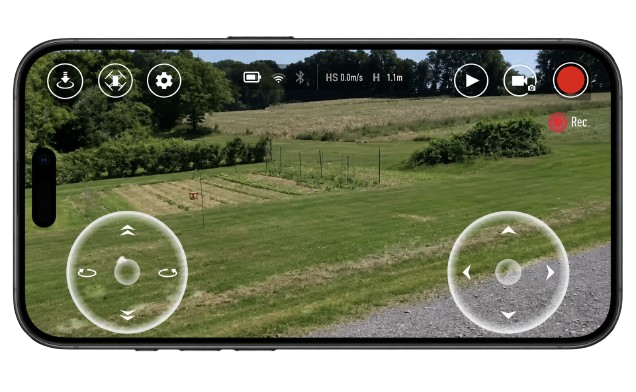
App-based controllers use smartphone or tablet apps to control a drone via touchscreen interfaces. The pilots use virtual joysticks that are projected on the screen rather than physical joysticks. These systems are often found in beginner-friendly drones and toy-grade UAVs.
App-based controllers are easy to use and convenient but are often not as accurate as dedicated remote controllers. Communication range is also usually more limited, as this depends on Wi-Fi connections.
Key Features:
- Operated entirely through a smartphone or tablet
- No separate remote controller required
- Easy setup for beginners
- Suitable for casual recreational flying
Limitations:
- Reduced control precision
- Shorter communication range
- Less responsive than physical joysticks
- More difficult to operate in bright sunlight
Controllers based on apps are perfect for beginners who want to have a simple entry into drone flying before moving on to more complex control systems.
Drone Controller Modes
| Mode | Throttle Position | Popularity |
|---|---|---|
| Mode 1 | Right Stick | Rare |
| Mode 2 | Left Stick | Most Common |
| Mode 3 | Right Stick | Limited |
| Mode 4 | Left Stick | Rare |
Mode 2 is considered the global standard and is recommended for most pilots.
Safety Features Managed Through Drone Controllers
- Return-to-Home (RTH) – Automatically brings the drone back to the takeoff point
- Low Battery Warning – Alerts pilots when power becomes critically low
- Signal Loss Protection – Triggers automatic hovering or return if communication fails
- Geo-Fencing – Prevents flying in restricted airspace
- Emergency Motor Stop – Stops motors during critical emergencies
Importance of Controller Calibration
Calibration ensures that the controller accurately interprets stick movements.
- Prevents drifting
- Improves control accuracy
- Ensures stable hovering
You must calibrate the aircraft before the first flight, after firmware updates, after crashes, and whenever the controls feel funny.
Common Drone Controller Mistakes
- Over-controlling sticks
- Sudden throttle changes
- Poor antenna positioning
- Ignoring yaw control
- Flying beyond signal range
Best Practices for Using Drone Controllers
- Practice roll, pitch, yaw, and throttle individually
- Maintain visual line of sight
- Keep controller batteries fully charged
- Avoid interference-heavy areas
- Update firmware regularly
- Use neck straps during long operations
- Monitor signal strength continuously
Professional drone pilots learn to fly with smooth stick control because the accuracy of the flight is largely due to the skill of the operator.
The Future of Drone Controllers
Drone controller technology is rapidly evolving.
- AI-assisted flight control
- Gesture-based operation
- Voice commands
- Autonomous mission planning
- Haptic feedback systems
- Cloud-connected control platforms
- AR-assisted flight interfaces
But manual flying skills will still be needed, because pilots need to understand how aircraft behave in emergencies and complicated operations.
Conclusion
Controller operation is at the core of drone safety and precision. Controllers translate human inputs into wireless signals that enable drones to take off, hover, turn, maneuver, and gather information.
Knowledge about roll, pitch, yaw, throttle, radio communication systems, controllers themselves, and safety features will help pilots be more confident and responsible.
No matter whether you pilot a photography drone for beginners, a fast FPV racer, or a UAV used for industrial inspection, knowing how to use your controller is one of the key competencies of any drone aviator.
The development of drone technology will make controllers even more advanced, but the basics of flight control will always stay relevant for every drone pilot.